

Is Thimerosal Or Mercury In Eye Makeup
THIMEROSAL
Score:

Data: Robust
- Other Concerns
- Functions
- About the Chemic
- Synonyms
-
Use restrictions (loftier), Neurotoxicity (high), Endocrine disruption (low), Persistence and bioaccumulation (high), Non-reproductive organ system toxicity (high), Ecotoxicology (depression), and Occupational hazards (high)
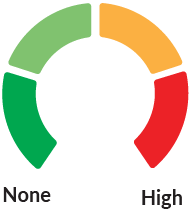
Cancer: Ingredients linked to cancer in government, industry or academic studies or assessments.

Developmental and reproductive toxicity: Ingredients linked to developmental and reproductive toxicity, a broad class of health furnishings that range from infertility and reproductive organ cancers to birth defects and developmental delays in children.
Allergies and immunotoxicity: Ingredients linked to impairment to the immune system, a class of health problems that manifest as allergic reactions or an impaired chapters to fight affliction and repair damaged tissue in the body.
| Business organisation | Reference |
|---|---|
| Known human respiratory toxicant | EPA Chancy Air Pollutants |
| Classified as expected to be toxic or harmful | Surroundings Canada Domestic Substance List |
| Classified as toxic or harmful | CPS&Q - Nomenclature & Labelling |
| Limited evidence of kidney toxicity | National Library of Medicine HazMap |
| Limited evidence of sense organ toxicity | Scorecard.org Toxicity Data |
| reproductive - weight of testify unknown/unassessed/unreview: published lit review or major tox study | National Library of Medicine HazMap |
| Concern | Reference |
|---|---|
| Known homo nervous organization toxicant | Open up scientific literature |
| Express testify of any toxicity | Open scientific literature |
| nervous system - weight of prove unknown/unassessed/unreview: published lit review or major tox study | National Library of Medicine HazMap |
| Concern | Reference |
|---|---|
| Violation of government restrictions - Banned or institute unsafe for use in cosmetics | Canada - Prohibited and Restricted Cosmetics Ingredients |
| Restricted in cosmetics (recommendations or requirements) - employ, concentration, or manufacturing restrictions - Restricted for utilize in cosmetics by the FDA (US) | U.S. - Ingredients Prohibited and Restricted in Cosmetics by FDA Regulations |
| Concern | Reference |
|---|---|
| Persistent, bioaccumulative in wildlife and humans | National Library of Medicine HazMap |
| Persistent, bioaccumulative in wildlife and humans | EPA Toxic Release Inventory PBTs |
| Persistent, bioaccumulative in wild animals | Dandy Lakes BTS (Binational Toxics Strategy) PBTs |
| Persistent, bioaccumulative in wildlife | Canada PBTs - Accelerated Reduction/Elimination of Toxics (ARET) |
| Persistent, bioaccumulative in wildlife | EPA PBTs - Waste product Minimization Program (RCRA) |
| Persistent, bioaccumulative in wildlife | National Library of Medicine HazMap |
| Not suspected to be bioaccumulative | Environment Canada Domestic Substance Listing |
| Concern | Reference |
|---|---|
| Allowed workplace exposures restricted to low doses | CPS&Q - Nomenclature & Labelling |
| Potent evidence of occupational hazards | CPS&Q - Nomenclature & Labelling |
| Business concern | Reference |
|---|---|
| Possible human developmental toxicant | California EPA Suggestion 65 |
| Limited evidence of reproductive toxicity | National Library of Medicine HazMap |
| Limited prove of reproductive toxicity | CPS&Q - Classification & Labelling |
| Limited evidence of any toxicity | Open scientific literature |
| Limited show of reproductive toxicity | Scorecard.org Toxicity Information |
| Concern | Reference |
|---|---|
| Limited evidence of immune system toxicity or allergies | Scorecard.org Toxicity Information |
| Limited show of immune system toxicity or allergies | National Library of Medicine HazMap |
| Concern | Reference |
|---|---|
| Limited bear witness of endocrine disruption | Scorecard.org Toxicity Data |
| endocrine - weight of prove unknown/unassessed/unreview: published lit review or major tox report | Our Stolen Future Endocrine Disruptors |
| endocrine - weight of show unknown/unassessed/unreview: published lit review or major tox study | Illinois EPA Chemicals Associated with Endocrine Arrangement |
| Concern | Reference |
|---|---|
| Mutagen - limited evidence | CPS&Q - Classification & Labelling |
| Express or incomplete evidence of cancer according to safety/hazard data – government assessment cannot classify as homo carcinogen due to data gaps | Int'l Agency for Research on Cancer (IARC) - Carcinogens |
| Express or incomplete prove of cancer according to safety/adventure data – regime cess cannot classify every bit human being carcinogen due to information gaps | EPA Integrated Take a chance Information System (IRIS) |
| Concern | Reference |
|---|---|
| Wildlife and environmental toxicity | CPS&Q - Classification & Labelling |
| Wild animals and environmental toxicity | Illinois EPA Chemicals Associated with Endocrine Arrangement |
| Wildlife and environmental toxicity | European Marriage - Water Framework Directive |
| Wild fauna and environmental toxicity | EPA Clean Water Act - Priority Pollutants |
| Suspected to exist an environmental toxin and be persistent or bioaccumulative | Environment Canada Domestic Substance List |
| Suspected to exist an ecology toxin | Environment Canada Domestic Substance List |
| Business organization | Reference |
|---|---|
| Occupational hazards related to handling | CPS&Q - Nomenclature & Labelling |
| Concern | Reference |
|---|---|
| Bereft data to determine condom | EPA Integrated Run a risk Information System (IRIS) |
| 307891 studies in PubMed science library may include information on the toxicity of this chemical | NLM PubMed |
- EPA (U.S. Environmental Protection Agency). 2005. Role of Air. The 112(b)1 Hazardous Air Pollutants List (as modified). Last modified: 12 Dec 2005.
- EC (Environment Canada). 2008. Domestic Substances Listing Categorization. Canadian Ecology Protection Act (CEPA) Environmental Registry.
- CPS&Q (Consumer Products Safe & Quality) formely known as ECB (European Chemicals Bureau). 2008. Classification and Labelling: Chemicals: Addendum Half-dozen of Directive 67/548/EEC through the 31st ATP.
- NLM (National Library of Medicine). 2006. HazMap — Occupational Exposure to Hazardous Agents.
- ED (Environmental Defence). 2006. Scorecard _ The Pollution Information Site. http://www.scorecard.org.
- Open scientific/peer reviewed literature
- Health Canada. 2007. Listing of Prohibited and Restricted Cosmetic Ingredients. Canada's Cosmetic Ingredient Hotlist. March 2007.
- FDA (U.South. Nutrient and Drug Administration), 2006. Ingredients Prohibited and Restricted by FDA Regulations. FDA Centre for Food Safety and Practical Nutrition, Office of Cosmetics and Colors. Downloaded from http://www.cfsan.fda.gov/~dms/cos-210.html.
- EPA (U.Southward. Environmental Protection Agency). 1999. Toxics Release Inventory Programme. PBT Chemic Rule.
- Great Lakes BTS (Binational Toxics Strategy). 1997. Canada-United States Strategy for the Virtual Elimination of Persistent Toxic Substances in the Slap-up Lakes. Appendix I - Level 1 and Level 2 substances.
- EC (Environment Canada). 1994. Accelerated Reduction/Elimination of Toxics (ARET). ARET substance list of persistent, bioaccumulative and toxic chemicals.
- EPA (U.S. Ecology Protection Agency). 1998. Resource Conservatin and Recovery Human action (RCRA) Waste Minimization Plan - priority chemicals for elimination or reduction.
- California EPA (California Environmental Protection Bureau). 9/2008. Office of Ecology Health Risk Cess. Prophylactic Drinking Water and Toxic Enforcement Act of 1986. Chemicals known to the State to cause cancer or reproductive toxicity.
- Colborn T, D Dumanoski, JP Myers. 2006. Widespread Pollutants with Endocrine-disrupting Effects. Updated from original listing in "Our Stolen Future" (1996).
- Illinois EPA (Illinois Environmental Protection Agency). 2000. Preliminary list of chemicals associated with endocrine arrangement furnishings in animals and humans (*) or in vitro (+). In EPA (U.S. Ecology Protection Agency) 2000. Handbook for Non-Cancer Wellness Furnishings Valuation, Appendix C.
- IARC (International Agency for Enquiry on Cancer). 2008. Overall Evaluations of Carcinogenicity to Humans, as evaluated in IARC Monographs Volumes 1-99 (a total of 935 agents, mixtures and exposures).
- EPA (U.S. Environmental Protection Agency). 2008. Integrated Risk Data Organization (IRIS). Evidence for human carcinogenicity based on 1986-2005 guidelines.
- European union (European Matrimony). 2000. Water Framework Directive (Directive 2000/threescore/EC ) - integrated river basin direction for Europe. List of priority substances.
- NLM (National Library of Medicine). 2012. PubMed online scientific bibliography data. http://www.pubmed.gov.
Virtually THE Peel DEEP® RATINGS
EWG provides information on personal intendance product ingredients from the published scientific literature, to supplement incomplete data available from companies and the government. The ratings below indicate the relative level of concern posed past exposure to the ingredients in this product - not the production itself - compared to other production formulations. The ratings reflect potential wellness hazards simply do not account for the level of exposure or individual susceptibility, factors which make up one's mind actual health risks, if any. Learn more | Legal Disclaimer
Nearly EWG VERIFIED™
Beyond providing Skin Deep® as an educational tool for consumers, EWG offers its EWG VERIFIED™ mark as a quick and easily identifiable way of conveying personal care products that meet EWG's strict wellness criteria. Earlier a company can use EWG VERIFIED™ on such products, the company must show that information technology fully discloses the products' ingredients on their labels or packaging, they do not contain EWG ingredients of concern, and are made with good manufacturing practices, among other criteria. Note that EWG receives licensing fees from all EWG VERIFIED™ member companies that help to support the important work we practice. Learn more | Legal Disclaimer
Source: https://www.ewg.org/skindeep/ingredients/706528-THIMEROSAL-THIMEROSAL-THIMEROSAL-THIMEROSAL-THIMEROSAL/
Posted by: fergusoncend1944.blogspot.com
0 Response to "Is Thimerosal Or Mercury In Eye Makeup"
Post a Comment